Monday, 27 February 2012

Delicious Berry Cups


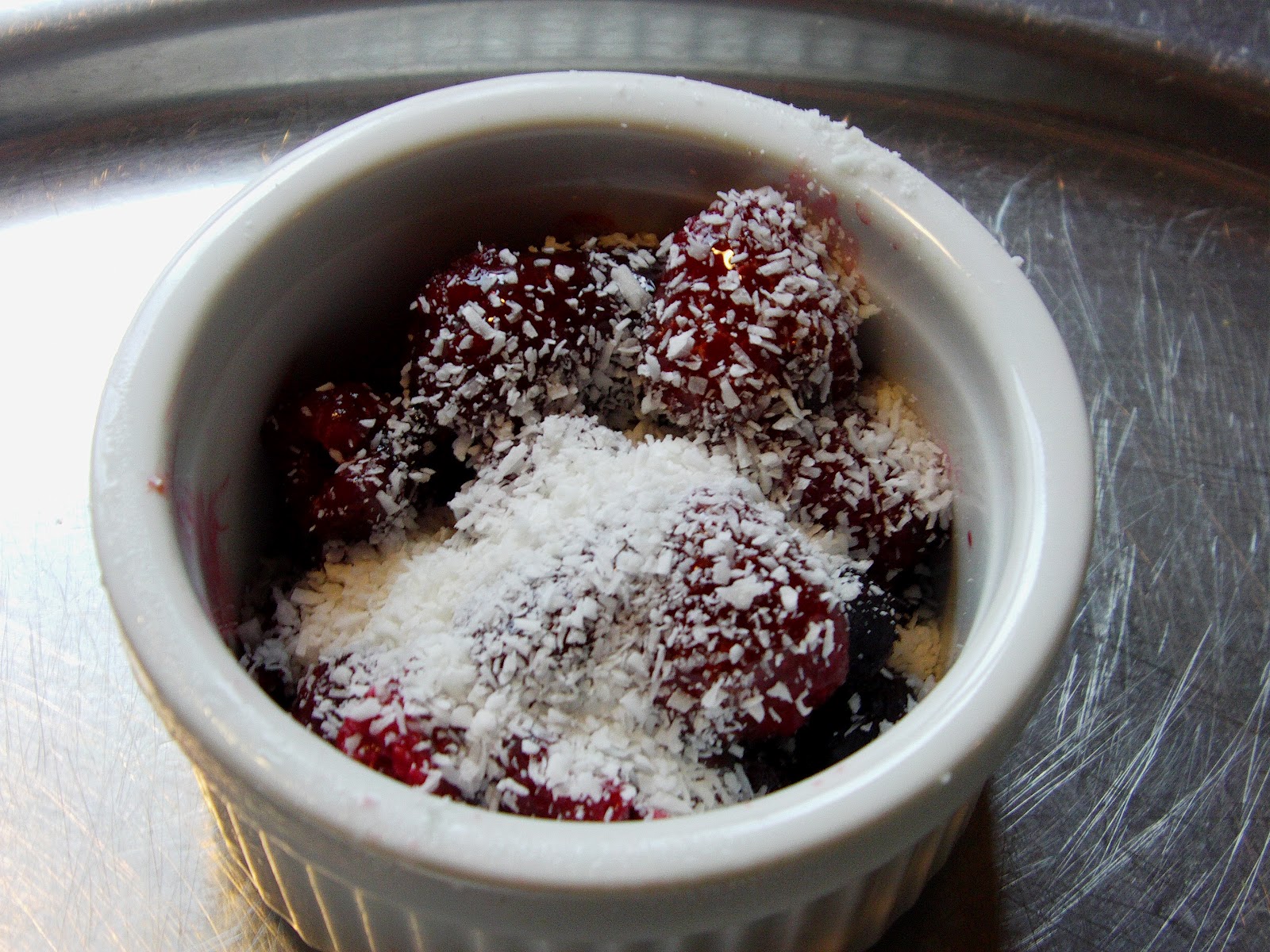
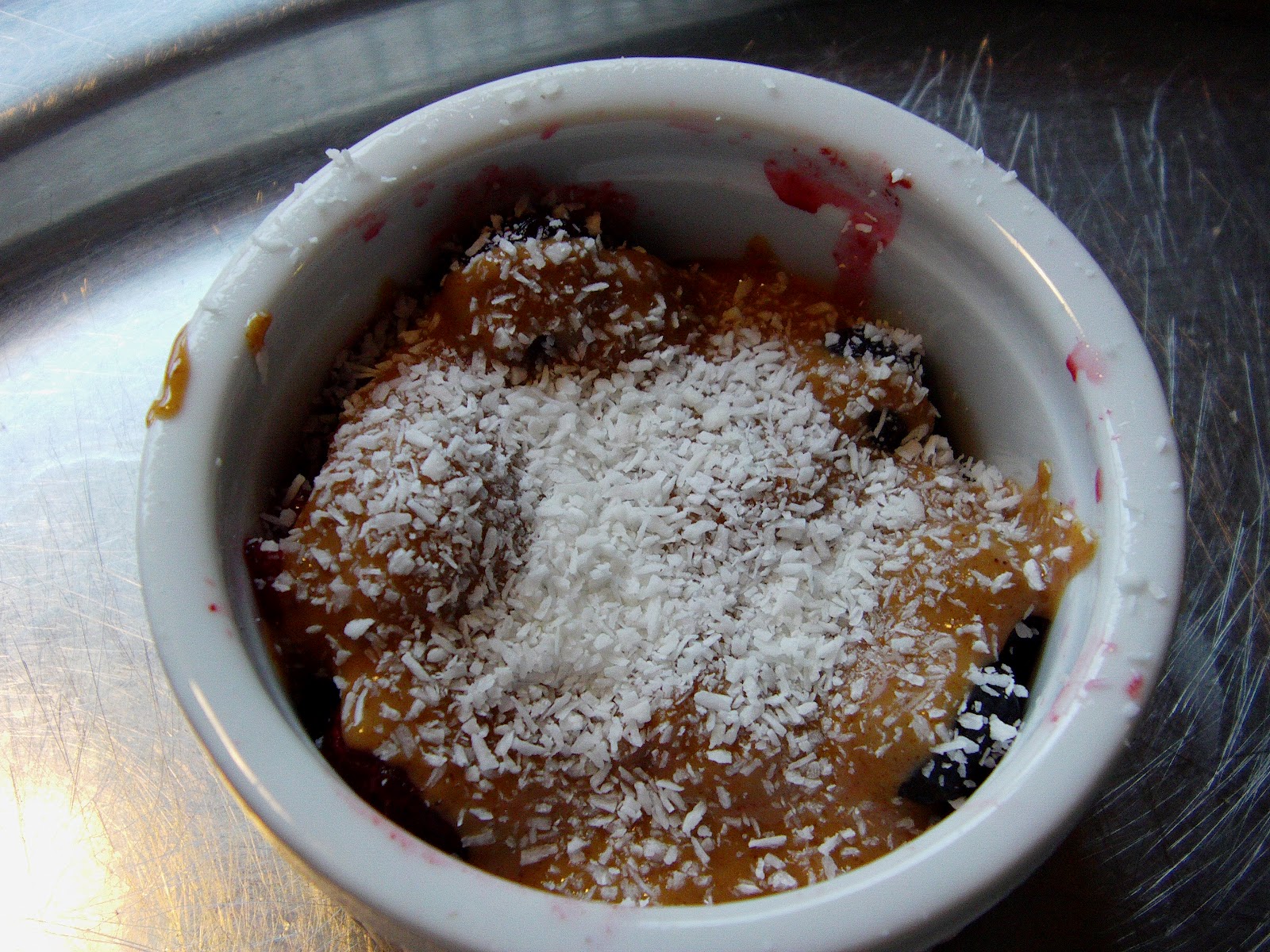
We love berries in our family and we eat a lot more berries than fruit. Today was one of those gray and boring days, so we decided to make these tasty treats and eat them as dessert after lunch. Berries are highly nutritious and low in sugar. I have previously written that blueberries are superfood. Today we used a mixture of blueberries, raspberries, and blackberries.


My oldest son decided to top his berry mixture with raw honey and unsweetened shredded coconut.


My daughter and my youngest son put almond butter, honey and shredded coconut on top of their berries.


I just added almond butter and shredded coconut on top of my berries.

Berry cups are great snacks and you can make them any way you want.


------------------------------------------------------------------------------------------------------------


Johanna is an aromatherapist and she is passionate about educating people about health, essential oils, real food, natural remedies, and nutrition so they make healthier choices in their lives. 

Follow Johanna on twitter and facebook for more health tips and information.


This post is linked to:
Riverton Housewives Round UpMonday ManiaFat TuesdayTraditional TuesdaysMake Your Own Monday Link-Up Frugal Days, Sustainable Ways  Healthy 2Day Wednesdays Allergy-Free WednesdayReal Food WednesdayWhat's Cooking Wednesday Gluten Free Wednesdays This chick cooksFreaky FridayAllergy Friendly Lunch Box Love Fight Back Friday Friday Food Foodie Friday Seasonal Celebration Sunday Sunday School Domestically DivineHomemaking Link UpHow to TuesdayEco-Kids TuesdayThe Gathering Spot

Friday, 24 February 2012

Living Well Blog Hop # 30


Welcome to the Living Well blog hop! We’d like to invite you to share a blog post about what you do to Live Well. It could be a healthy recipe, exercise tips, ideas for relaxing, getting organized, lifestyle improvements – anything that you feel makes your life better.

Your Living Well hosts for the week are:


Tina @ Being Made New

Featured Posts from Last Week’s Hop

We have reached our 30th Blog Hop! My favorite posts from last week's link-up are featured below. If you're featured, feel free to grab the button below.

Living Well Blog Hop


Sharon at the Woodwife Journal shared the post, New Body Butter Trio, where she shares some great body butter recipes. The Orange Chocolate Poppy Seed Scrubbie Butter is my favorite, which one is yours?


Lisa at Granola Catholic shared the post, Coconut Oil in the Bathroom. I'm a big fan of using coconut oil for my body. Lisa shares some great tips on how to use coconut oil in the bathroom.


Adrienne at Whole New Mom shares the post, Almost Reese’s Candy (with allergy & sugar-free options). These are great treats if you like our family avoid peanut butter, dairy and sugar. I can't wait to make these.


Living Well Blog Hop guidelines:

1. Please provide a link back to one of the Living Well host blogs in your post. Grab one of the buttons below if you like.
2. Please link to a specific post in your blog, not your blog’s home page.
3. If you link a recipe, please use real foods and avoid highly processed ingredients. Recipes low in refined sugar/refined carbohydrates are preferred.
4. The hosts of the blog hop reserve the right to remove any posts that we deem inappropriate.
 5. Please leave a comment below to tell us a little more about your link or share your tips if you don't have a blog.  (Linked posts do not need to be from this week.)


Thanks for joining us in Living Well.


Living Well Blog Hop

Thursday, 23 February 2012

Quick and Easy Essential Oil Glycerine Soaps


It is not necessary to make glycerine soaps with infused herbs all the time. Essential oils are more potent than herbs, and they provide powerful healing properties and pleasant aromas. Below are a couple of recipes that are quick and easy to make. Older children can also help making them.

Lavender-Peppermint Soap
4 ounces clear solid glycerine (usually about 3 cubes)
15 drops lavender
5 drops peppermint
soap molds.

Melt glycerine in the microwave (about 40 seconds) or in a double boiler. I prefer to use a double boiler. Pour hot glycerine into the soap molds. Allow it to cool slightly before adding the essential oils.

Citrus Soap
Follow the recipe above, but substitute these essential oils for lavender and peppermint.
6 drops lemon
10 drops bergamot
10 drops grapefruit
4 drops mandarin

Some grocery stores sell un-scented glycerine soaps that can be melted down. Our local Raley's sell them and I use them sometimes when I don't have any other soap base at home.


------------------------------------------------------------------------------------------------------------


Johanna is an aromatherapist and she is passionate about educating people about health, essential oils, real food, natural remedies, and nutrition so they make healthier choices in their lives.  
Follow Johanna on twitter and facebook for more health tips and information.


This post is linked to:
Simple Lives Thursday
Healthy 2Day Wednesday 
Frugal Days, Sustainable Ways

Monday, 20 February 2012

Calming an Overactive Child


An overactive child isn’t necessary “hyperactive” and sometimes children are overactive at certain times. Refined carbohydrates, MSG, food colors and additives have been known to cause overactivity in children. Some children become hyperactive when they eat something they are sensitive to. State of overstimulation and excitement may benefit from relaxation and sedative essential oils. These oils may also be beneficial in tantrums, anxiety attacks, and overtiredness.

Aromatherapy works on a subtle level. Relaxation oils are natural plant derivatives that may aid the body in relaxation, slowing the respiration and heart rate, and soothing an overstimulated nervous system. The most effective methods utilizing aromatherapy are using those oils which cross the blood-brain barrier by inhalation.

Massage is less direct but also effective. It is important to remember to use stated doses when using therapeutic relaxation oils and not too much. An opposite effect takes place if the oils are overused.

Valeri Cooksley suggests to make a calming mist so that is what I used to do for my children or when I baby sit other children.

I make a Calming Mist- a room spray to relax, this can be diffused in the air, and I can even spray it on things if needed.  

1 cup distilled water
10 drops  lavender
5 drops marjoram
2 drops sandalwood
a spray bottle with mist nozzle

Add the drops to the spray bottle. Shake before spraying.
Aromathic baths are relaxing and calming, and using diffusers are also a great way to spread the healing oils.
Cooksley lists other relaxing and calming oils such are chamomile, clary sage, mandarin, marjoram, neroli, orange, sandalwood and tangerine as being suitable for calming children.

Many have been successfully improved the behavior of their children by changing the diet and/or adding supplements.

Other related posts:
A Must Read ADHD/ADD Testimonial - How Diet Alone Drastically Improved A Life

Children On a Grain & Dairy Free Diet (Paleo)


----------------------------------------------------------------------------------------------------------------------------------


Johanna is an aromatherapist and she is passionate about educating people about health, essential oils, real food, natural remedies, and nutrition so they make healthier choices in their lives. 
Follow Johanna on twitter and facebook for more health tips and information.


Photo credit 

This post is linked to:
Fat Tuesday Simple Lives Thursday Healthy 2day Wednesday, Eco-Kids Tuesday

Friday, 17 February 2012

Living Well Blog Hop # 29


Welcome to the Living Well blog hop! We’d like to invite you to share a blog post about what you do to Live Well. It could be a healthy recipe, exercise tips, ideas for relaxing, getting organized, lifestyle improvements – anything that you feel makes your life better.

Your Living Well hosts for the week are:


Tina @ Being Made New


Living Well Blog Hop guidelines:

1. Please provide a link back to one of the Living Well host blogs in your post. Grab one of the buttons below if you like.
2. Please link to a specific post in your blog, not your blog’s home page.
3. If you link a recipe, please use real foods and avoid highly processed ingredients. Recipes low in refined sugar/refined carbohydrates are preferred.
4. The hosts of the blog hop reserve the right to remove any posts that we deem inappropriate.
 5. Please leave a comment below to tell us a little more about your link or share your tips if you don't have a blog.  (Linked posts do not need to be from this week.)


Thanks for joining us in Living Well.


Living Well Blog Hop

Monday, 13 February 2012

Are You Going to Attend the Paleo Summit?


Sean Croxton over at the Underground Wellness is hosting a Paleo Summit on February 26th- March 4th. My husband and I first came across Sean when he just started off several years ago. It is amazing to see what he has managed to accomplish since then.

This Paleo Summit is a great opportunity to learn more about the grain free Paleo/Primal Diet from great experts. There is a lot of talk online whether or not to eat grains, some people are getting as far as to ridiculing others of their way of eating. I see no reason why we should judge each others way of living healthy, after all we are all doing what we think is right for us. We have been grain free for quite a while now and I'm convinced this is the best way for our family. We have never felt better and we scan better than ever on our biofeedback machine.

I highly recommend that you tune into this summit and learn more about a grain free diet from these experts below. Check out the Paleo Summit Page to register and to learn about the other experts attending this summit.


Mark Sisson – Author, The Primal Blueprint Ancestral Living Defined 
 Mark Sisson kicks off The Paleo Summit by clearly defining paleo/primal living. Are grains safe to eat? Is dairy Paleo? Did your ancestors cut the saturated fat? Mark gives us the scoop.
Diane Sanfillipo – Author, Practical Paleo Practical Paleo Implementation
 Now that you know what to eat, the next step is putting it into practice. Diane explains what to expect from the Paleo Diet, how to overcome common obstacles, and the most effective ways to deal with the doubters.
Dr. Jack Kruse MD – NeurosurgeonLeptin Circadian Cycles
 Dr. Kruse uncovers how leptin resistance lies at the root of inflammation, obesity, and chronic disease. He also shares how he lost 133 pounds in a single year by correcting the “biological mismatches” that were once prevalent in his life.
Sarah Fragoso – Author, Everyday Paleo Paleo, Kids, and the Family 
Transitioning a family to a paleolithic diet can be challenging. Author, wife, and mother of three, Sarah Fragoso rolls out a practical, realistic strategy for having a Paleo family.


Dr. Thomas O’Bryan – Gluten Sensitivity ExpertThe Musculoskeletal Connection to Autoimmunity Disease 
The most basic Paleo Diet recommendation is the removal of gluten. But did you know that gluten sensitivity goes well beyond the digestive tract? Dr. O’Bryan reveals the latest research on how gluten consumption may lead to autoimmune disease, osteoporosis, and muscle pain without digestive symptoms.
Mat Lalonde, Ph.D. – Research Biochemist, Harvard University Invalid Inferences: An Organic Chemist’s Perspective on Paleo 
Are common Paleo claims as scientifically valid as we think they are? What does the research really say about antinutrients? Harvard biochemist Mat Lalonde expounds the importance of keeping the Paleo movement credible by ensuring that claims surrounding the diet are scientifically sound.
Nora Gedgaudas – Author, Primal Body-Primal MindSafe Starches: To Eat or Not to Eat?
 Safe starches have received their fair share of attention — and no shortage of controversy — in the Paleo blogosphere as of late. The Primal Body-Primal Mind outlines point-by-point why she believes the concept of safe starches is flawed.
Chris Kresser – Integrative Medicine Practitioner. An Update on Cholesterol 
The cholesterol hypothesis has its staunch proponents as well as its skeptics. So who’s right? Chris presents the latest research demonstrating why elevated cholesterol scores should not be dismissed by the skeptics. He also explains why a high cholesterol score is not always cause for a prescription.
Paul Chek – Founder, C.H.E.K. Institute Living Primal: Instinct Before Intellect
With so much research and history supporting Paleo principles, why do people have such a hard time living them? Paul explains how the social conditioning built into the educational system has suppressed our abilities to think for ourselves. He also details the six foundational principles of abundant health — nutrition, hydration, sleep, breathing, thinking, and movement.
 Let me know what you think about the Summit.

This post is linked to:
Fat Tuesday


Saturday, 11 February 2012

Stop the Antibiotic Resistant Bacteria - Three Herbal Antibiotics- Part 3


This is my third post in the series about Herbal Antibiotics. I have decided to cover 15 antibiotic herbs in several posts. As mentioned in the first post, herbs are more complex than antibiotics and the bacteria has a harder to time to develop resistance to  herbs. In the second post I list the 15 top antibiotic herbs based on the book, Herbal Antibiotics by Stephen Harrod Buhner. Today I will focus on the herbs Acacia, aloe, and cryptolepsis.

According to Stephen Harrod Buhner:


Photo Credit

Acacia (Acacia spp.)
Acacia is part of the Mimosaceae family. All the parts of the plant can be used  and they can be picked at various times of the year. The pods can be gathered when they are green, the flowers when in bloom, and the roots can be chopped into small pieces before drying. The gum can be collected by cutting a line into the lower part of the bark.

Some of Acacia's therapeutic actions are:
Antimalarial, astringent, antibacterial, antimicrobial, anticatarrhal, anthelmintic, antifungal, anti-inflammatory and sedative.

Acacia is active against:
Staphylococcus aureus, Salmonella spp., Pseudomonas aeruginosa, malaria, Shigella dysenteriae, Escherichia coli, Proteus mirabilis, Neisseria gonorrhoeae.

Buhner says Acacias are useful for excessive mucus, diarrhea, catarrh, hemorrhage, gum infections, dysentery and gastrointestinal ulceration. There are different species of Acacia and some species are used for parasitic infestation in some parts of the world.  Acacia is not used as much in the United States, but is widely used for its medicinal properties in other parts of the world. Acacia can found in the south and as far north as Kansas and all the way between California and Florida.

Acacia can be used as powder, tea, or wash. Pods, stems, and and leaves should be used powdered. Buhner recommends 3-12 cups a day for malaria, diarrhea, and dysentery. The leaves and flowers should be used as tea for gastrointestinal tract inflammation. The roots should be used to make mucilaginous tea that is antibacterial and anti-inflammatory. Tea of stems, pods, and leaves can be used to wash wounds according to Buhner.

Mesquite (Prosopis julifera) is a suitable alternative to Acacia if you can't find it. It may be used identically.


Photo Credit

Aloe ( Aloe vera and other species)
Aloe is part of the Liliaceae family. It is usually the fresh juice that is used but sometimes the dried plant is used internally. The fresh plant leaves can be used anytime. The leaves are cut open and the juice is applied to burns and wounds. 

Some of Aloe's therapeutic actions are:
External use: Antibacterial, antimicrobial, antiviral, wound healing, anti-ulcer, and inflammatory.
Internal use: Purgative, and it also stimulates smooth muscle contractions.

Aloe is active against:
Staphylococcus aureus, Pseudomonas aeruginosa, Herpes simpex 1 and 2.

Buhner says that Aloe and honey can be applied externally to speed wound healing to prevent infection. Burn victims are extremely prone to Staphyloccus aureus infections. Since Aloe is a liquid it will keep the tissue moist and restore lost body fluid. It will also soothe the damaged tissues.

Slice open the leave of the fresh plant and apply liberally to a burn or wound. Aloe stimulates smooth muscle contraction when taken internally.

Honey can be used as an alternative to Aloe. Echinacea or St.John are less desirable choices to be used for wound healing.


Photo Credit

Cryptolepsis (Cryptolepsis sanguinolenta)
Cryptolepsis is part of the Asclepiadaceae family. The roots are used and they can be harvested anytime of the year. Cryptolepsis is a shrub found in several parts of Africa.


Some of Cryptolepsis' therapeutic actions are:
Antiparasitic, antimalarial, antibacterial, and antifungal.

Cryptolepsisis active against:
Staphylococcus aureus, malaria, Shigella dysenteriae, Escherichia coli, Neisseria gonorrhoeae, Candida Albicans, Camphylobacter, both gram-positive and gram-negative bacteria.

According to Buhner, Cryptolepsis has been used for centuries by African healers in treatments of fevers, bloody diarrhea, and malaria. Human clinical trials have shown that Cryptolepsis to be potent for malaria. 


Cryptolepsis can be used as powder, capsules, tincture, or tea. Crushed powder can be used externally for fungal or bacterial infections.

For malaria, Buhner recommends to use Artemisia annua or A. absinthium, Brucea javanita, Uvaria spp., or the bark of Cinchona spp as alternatives to Cryptolepsis.


The book, Herbal Antibiotics by Stephen Harrod Buhner gives you detail information about each herb on how to prepare them, what parts to use, and how much of each herbs to use for various ailments.

Stay tuned! I will cover the next three herbs on the list  in more  detail next time. You'll find out how  to use them and for what conditions they are traditionally used for.


Source: Herbal Antibiotics by Stephen Harrod Buhner.

This post is linked to:
Sunday School
Fat Tuesday 
Healthy 2Day Wednesday 
Frugal Days, Sustainable Ways 
Wildcrafting Wednesday 
Simple Lives Thursday