Monday, 12 August 2013

To Lose Weight: Eat Breakfast Like a King, Dinner Like a Pauper

Photo Source: CDC
There may be something to the old adage to eat breakfast like a king, lunch like a prince, and dinner like a pauper when it comes to better managing your weight, according to a study published in the journal, Obesity.  Researchers at Tel Aviv University (TAU) studied how changing the timing of meals by switching between a high calorie breakfast and a high calorie dinner, but keeping the total daily calories the same, would impact weight loss.  In this 12-week study, 50 overweight women were randomly assigned to a 1,400-calorie diet that consisted of a breakfast of 700 calories, a lunch of 500 calories, and a dinner of 200 calories or the same calories and same food choices but with the breakfast and dinner meals switched.

While both groups lost significant amounts of weight, the women consuming the large breakfast lost an average of approximately 19 pounds compared to only about 8 pounds in the large dinner group.   The breakfast group also lost twice as many inches around their waists than the large dinner eaters.  Since the hormone ghrelin, which increases your appetite, was lower during the day in the breakfast group, these women also experienced higher levels of satiety, or that filling of fullness, throughout the day.  In addition, large breakfast eaters also had significantly lower levels of insulin, glucose, and fat in their blood, which may help lower the risk of diabetes and heart disease.

The secret may lie in the body’s circadian rhythms, which are physical, mental, and behavioral changes in the body and can influence hormone release and other bodily functions.  “Metabolism is impacted by the body’s circadian rhythm, the biological process that the body follows over a 24-hour cycle.  So the time of day we eat can have a big impact on the way our bodies process food,” says Professor Daniela Jakubowicz, MD, of TAU’s Sackler Faculty of Medicine and the lead researcher of this study.

This isn’t the first study to suggest that eating your larger meal earlier in the day can have some health benefits.  For those trying to lose weight, flipping your calories to eat breakfast like a king, lunch like a prince, and dinner like a pauper may help you flip the numbers on the bathroom scale. 

Here are some tips:

  1. Consider having a larger breakfast and smaller dinner. Consuming protein at each meal will help keep you full between meals.
  2. Stop eating after dinner.  Avoid munching in the evening, which is often more due to boredom than hunger.
  3. Make sure that your diet is well-balanced to meet your daily nutrients needs.  Fiber-rich whole fruit, vegetables, and whole grains are important dietary staples that also satisfy hunger between meals. 

Be well, Joan

Follow Joan on Twitter at:  joansalgeblake

If you have a nutrition topic you would like discussed, please email me at salge@bu.edu

Monday, 5 August 2013

Would You Eat a Lab Grown Hamburger?

Dr. Mark Post with cultured burger.  Courtesy of Maastricht University
When buying ground beef in future, you may need to not only look on the label to make sure that it is lean but you may have to also decide if you want the variety that came naturally from a cow or the one that was grown in a petri dish. 

Today in London, Professor Mark Post MD, PhD, from Maastricht University in Netherlands unveiled the first lab meat produced using stem cells from cows and grown in his lab.   The stem cells were fed protein, fat, and carbohydrates and cultivated to grow muscle meat.  For more on the process of creating cultured beef, click here.

His goal was achieved today by taking this laboratory grown muscle meat and creating a hamburger.  This is what the hamburger looks like:

Source: Masstricht University
Post has two motivations for creating lab grown meat.  According to the Next Nature Power Show lecture that he delivered, the current way we produce meat for consumption is no longer sustainable to feed the world population.  The problem lies in the inefficiency in which animals convert the protein-rich plant feed that they consume into the meat that we eat.  According to Post, for every 15 grams (about ½ ounce) of edible meat produced by the animal, it takes 100 grams (3.5 ounces) of vegetable protein-rich feed.  Not exactly good math.  The second reason is that the way we currently produce meat is not good for the environment.  According to Post, due to the large amounts of greenhouse gasses generated by the grazing animals and required during the processing of the meat, “a vegetarian in a Hummer is much more environmentally friendly than a meat eater on a bicycle.”  

While it is unlikely that a cultured burger will be in the supermarket any time soon, I think that consumer acceptance is going to be a major issue with trying to sell the public on lab grown meat.  Ironically, this unveiling is coming on the heels of the current push for genetically modified organism (GMO) labeling on foods in order to provide consumers with informed choices when shopping for dinner.   According to the Huffington Post, Connecticut has passed a GMO labeling law and New York, Maine, and Vermont are considering similar legislation. 

So the question is, would you eat meat that was grown from stem cells?  Please post your thoughts below.


Be Well, Joan


                                        Follow Joan on Twitter at:  joansalgeblake

If there is a nutrition topic you want me to blog about, feel free to email me at salge@bu.edu.


Tuesday, 30 July 2013

Why Women Drink

Source: CDC
Gabrielle Glaser delivered her third baby and noticed a radical difference in the type of gifts that were being dropped off by her female friends.  Adorable baby gifts were delivered after each birth, but this last one was different.  Her well-educated friends were dropping off large amounts of wine.  A two-bottle gift was accompanied by a card that stated, “one for you and one to share.”

As a journalist with a trained, observational eye, Glaser started noticing a trend among her female colleagues, friends, and neighbors.  Women in their thirties, forties, and fifties were getting through their hectic days carpooling children, stressing over their teenager’s college application, or parenting their ill parents by drinking more.  Their beverage of choice was wine. 

In her new book, Her Best-Kept Secret: Why Women Drink—and How They Can Regain Control, she investigates this trend.   According to Glaser, women buy nearly two-thirds of the 784 million gallons of the wine sold in the United States annually, and they drink 70 percent of what they buy.  In her numerous conversations with women of varied backgrounds across the country, a reoccurring theme kept on coming uncorked. Women were drinking as “a poorly chosen but understandable way to cope with the stresses of modern life.”  Research suggests that many folks, especially women, look to alcohol when stressed.   While drinking provides empowerment for men, for women, it provides a sense of Chardonnay calm. 

According to David Rosenbloom, Ph.D., a Professor of Public Health at Boston University (BU), “Drinking rates have increased sharply over the past 10 to 20 years in college women, and they seem to have continued this heavier drinking into early adulthood. There is anecdotal evidence of young mothers--usually suburban--getting together for afternoon playgroups with the kids playing in one room or corner of the park while the mothers "take the edge off" with a glass of wine.” 

Stress and emotions aside, men and women are not created equal when it comes to handling alcohol.  Physiologically, there is a difference between how men and women handle alcohol that can cause women to feel the effects of alcohol sooner:
  • Women have less of the enzyme alcohol dehydrogenase in their stomachs than men.  Because this enzyme helps breakdown alcohol, more alcohol will be absorbed and enter a woman’s blood through her stomach than a man’s.
  • Women have less body water than men.  Because alcohol mixes in water, women are less able to dilute the alcohol being distributed throughout their bodies.  Thus, a woman’s brain will be exposed to a more concentrated and intoxicating amount of alcohol than a man’s.

If you are concerned about your alcohol consumption or know someone who is, the BU School of Public Health, in partnership with DrugFree.org, has created a self-screening program at alcoholscreening.org.   The program allows individuals to anonymously determine if their drinking pattern is problematic.  The website will also provide suggestions for positive lifestyle changes to reduce or eliminate the consumption of alcohol.

Be well, Joan


                                               Follow Joan on Twitter at: joansalgeblake

Monday, 22 July 2013

My Nutrition Advice for the New Royal Baby


Source: CDC
Dear Kate and William,

Congratulations on your new bundle of joy.  I know you are overwhelmed with excitement and nervousness about the next step.  As a nutrition expert and a mother who has “been there, done that,” I jotted down a few tips on how best to feed the newest heir to the throne:

Do Consider Breastfeeding:  Breast milk is considered the superfood for infants.  In fact, infant formula was developed using the nutrient composition of breast milk as the gold standard.  Nutrition aside, breastfeeding has also been shown to reduce the baby’s risk of ear infections, gastrointestinal problems, respiratory infections and possibly asthma in the short run and heart disease, high blood pressure, and obesity in the long run.  For mom, nursing can help reduce the risk of certain cancer and diabetes as well as allow her to shed those extra pounds that were put on during pregnancy.  Breastfeeding is a double win for both the Duchess and Prince.

Don’t Overdue the Caffeine:  Trust me, he may be a prince but sleep is king for newborn parents.   While only a small amount of the caffeine that the mom drinks is actually passed into the breast milk, it will be consumed by the baby, according to the American Academy of Pediatrics (AAP).  The last thing you need is a wide awake baby at 3 am.  The AAP recommends that moms consume no more than 3 cups of caffeinated coffee spread throughout the day but keep in mind that tea and some soft drinks contain caffeine.

Do Skip the Swordfish:   Avoid large bottom-dwelling fish, which include swordfish, shark, mackerel and tilefish (golden bass and golden snapper).  These fish feast on smaller fish and end up bioaccumulating a fair amount of methylmercury from polluted waters.   This contaminant can damage the baby’s nervous system, which includes the brain.  Since albacore tuna can also contain a a hefty amount of methylmercury, keep it to a maximum of 6 ounces a week.  However, feel free to eat up to 12 ounces of other types of fish weekly, such as salmon and cod, which are lower in methylmercury, and at this level, are not shown to cause harm.  If Queen Elizabeth wants to drop off her famous tuna casserole, tell her to use light tuna, instead of albacore. It is lower in methylmercury.

Don’t Forget the Vitamin D Drops:  While breast is best, as the saying goes, breast milk will fall short of meeting the baby’s daily needs of bone-strengthening vitamin D.  The little prince will be able to make vitamin D from adequate exposure to sunlight; however, there is a tradeoff.   The harmful ultraviolet rays of the sun can increase the risk of skin cancer.   Give him 400 IU of vitamin D daily instead.

Be well, Joan

PS:  Call if you need a babysitter. 

                                                    Follow Joan on Twitter at: joansalgeblake

Wednesday, 17 July 2013

physical activity

Photo Source: USDA
 Want to live longer?  Eating 5 servings of fruits and veggie daily may be your ticket to longevity.

According to a recent study of over 70,000 adults, those who ate less than 5 servings of fruits and vegetables daily were shown to have a 53 percent higher risk of dying compared to those who consumed 5 servings a day.   These findings persisted even after factoring in gender, smoking status, body weight, and educational level.   Past research has also suggested that a minimum of 5 servings ( 4 ½ cups) of produce daily can help you fight heart disease, certain cancers, and an expanding waist.

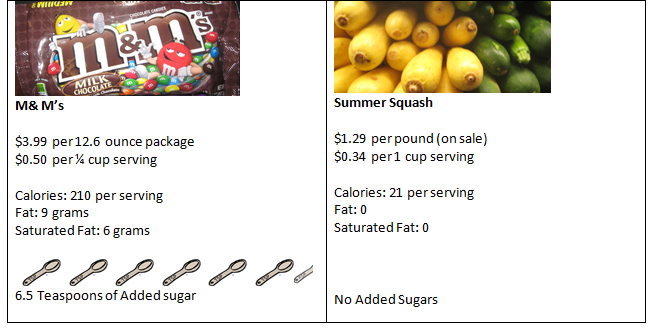
But an urban myth surrounding fruits and veggies is that their hefty price makes them a budget buster at the supermarket.  The latest study by the U.S. Department of Agriculture (USDA) busts this folklore as fruits and vegetables were found to be less expensive per serving than most protein foods (meat, poultry), as well as less healthy foods that are high in saturated fat and added sugars such as ice cream and soft drinks.  Another USDA study found that the cost of 153 commonly consumed fresh and processed fruits and vegetables ranged from less than $0.20 to about $2 per cup consumed.  Most fresh vegetables and fruits were less than $0.75 per cup.

I did some comparison shopping at a local Shaw's supermarket and confirmed that many higher calorie, saturated fat, and sugary foods were more expensive per serving than many fresh fruits and veggies.  Here is what I found:

Granted if you are buying winter squash in the summer and fresh cantaloupe in the winter, you are going to pay a premium price for out-of-season produce.    But if your fruit and veggies choices are in tune with the season, they don’t have to drain your wallet.  Buying in-season, on sale, and at local farmers’ markets can help you economically and healthfully consume adequate amounts of fruits and veggies daily, which may help you live longer.

Click here for a list of seasonal produce and farmers’ markets in your area.

                                          Follow Joan on Twitter at:  joansalgeblake

Tuesday, 9 July 2013

Are Smaller Portions the New Trend?

The results are in.  According to the International Food Information Council’s (IFIC) latest Food and Health Survey, over 70 percent of the 1,000 American adults surveyed stated that they are trying to consume smaller portions as a way to improve their diet.   Eating smaller portions could be one of the best strategic steps you can make to trim your waist as research suggests that as portion sizes increase so does the amount (and calories) that you unconsciously eat.

As we all know, both portion sizes and Americans’ weight have increased since the 1950’s.  To find out how much, take this short quiz:


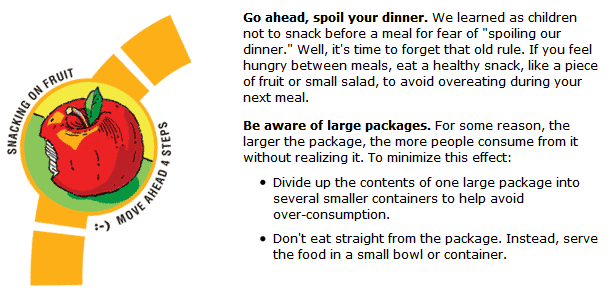
Since many of us are members of the "Clean Your Plate Club", downsizing the size of your beverage cups, bowls, and dinner plates in your kitchen is the place to start.  The less food you pour, scoop, and heap on at your meal, the less calories you will consume.    

Here are other research-based, portion control tips from the Centers for Disease Control and Prevention (CDC):


Source: CDC
  

Here's to smaller portions and a smaller you.

Be well, Joan

Follow Joan on Twitter at:  joansalgeblake

Monday, 1 July 2013

Too Busy To Cook a Healthy Meal? Join the Club.

Photo Source:  Cooking Light
Between working out of the house and shuttling two sons around town to two different sports teams, Sharon, a music teacher, mom, and wife often finds it challenging to get a healthy dinner on the table.  “I know the entire family needs to eat healthy in order to keep up with our hectic schedules, but it’s so hard.  Take-out is on my speed dial, and the crockpot is my best friend.   But some days, even the crockpot doesn’t have a prayer of being plugged in,” claims Sharon.

Unfortunately, Sharon isn't the only time-impaired person in the kitchen.  A recent study in Nutrition Journal analyzed the food preparation habits of over 55,000 adults and uncovered that women are spending over 40 percent less time in the kitchen preparing meals than they did in the 1960's.  Obviously, Sharon is among friends with this issue and help may be on the way. 

Cooking Light just launched its first-ever refrigerated, prepared-foods product line.  The meals are made from fresh ingredients and are designed for individuals like Sharon who want healthy, fresh, good-tasting foods but don't always have the time to prepare them from scratch.

“Consumers turn to Cooking Light for healthy recipes above all," said Scott Mowbray, Cooking Light Editor. "But the fact is they’re sometimes too busy to cook. It was logical to move into a prepared-foods line. However, we were very careful about our partners. We insisted that the food taste homemade, delicious, and in the style of our best recipes.  Our editors and Test Kitchen experts taste the food at every step and advise on formulations. Our dietitian scrutinizes the numbers. The result is healthy, ready-made food we’re absolutely proud of.”

According to Sidney Fry, MS, RD, Assistant Nutrition Editor at the magazine, the nutrition and recipe guidelines for the products are all maintained in accordance with the USDA's most current Dietary Guidelines and do not contain preservatives. The prepared foods are based on their top recipes from the magazine.

The 14 new ready-made, refrigerated items include:

Entrees:
Beef Provençal Stew
Chipotle Pork Roast
Seared Sliced Beef Sirloin
Sliced Chicken Breast
Sliced Turkey Breast

Stuffed Pastas
Chicken and Spinach Ravioli
Heirloom Tomato and Spinach Ravioli

Take and Bake
Chicken Enchilada Bake
Chicken Parmesan
Chicken Penne Alfredo
Chicken Pasta Primavera
Vegetable Lasagna

Soups and Sides
Lemon Orzo Chicken
Garden Minestrone
Potatoes Gratin

I sampled the Turkey Chili with Black Beans and the Vegetable Lasagna and both tasted as though I made them myself using a Cooking Light recipe.  These foods are currently only available exclusively at BJ’s Wholesale Clubs located on the east coast.  For additional information on the product line, click here.  You can also visit BJ’s Wholesale Clubs' website for a FREE 60-day membership.

“Since I know that a Cooking Light recipe is balanced, these products would appeal to me,” claims Sharon.  Who knows?  Maybe she won't be using the speed dial for dinner this week.

Be well, Joan

                                             Follow Joan on Twitter at: joansalgeblake