Monday, 3 February 2014

My Favorite Aromatherapy Books

I get a lot questions from people asking me what my favorite aromatherapy books are. I've read quite a a lot of books throughout the years and some are better than others. Once you learn more about essential oils you realize that many books have a lot of the same information.

Here we go:


My absolute favorite book is The Complete Guide to Aromatherapy by Salvatore Battaglia. It was a required textbook in my 12 month aromatherapy education at the American College of Healthcare Sciences, and I'm pleased to see that they still use the book. This book has been a great help in my consulting and blogging. I also like it because Battaglia also addresses dietary and lifestyle changes for each health condition. I purchased the first edition through my college and I purchased the second edition in a health food store in Wales, UK. It is quite an expensive book and it cost $ 110.00 on Amazon but you can buy it from my college store for $ 90.75. I highly recommend this book and it has so much information in it that you really don't need many other books. This is what it says about it in the Apothecary Shoppe:

"An indispensable book for everyone who wants to be extensively familiarized in the art and science of Aromatherapy. The Complete Guide to Aromatherapy is written in a clear, concise and well-presented format, with the student, professional Aromatherapist, pharmacist, nurse, doctor and lay-person in mind. Information contained within the 467 pages is quickly accessed through two comprehensive indexes, 29 well-defined chapters, and an array of appendices. This is the most recent edition with five new chapters.
Over 90 Essential oils are covered in detail as well as detailed information on the treatment of a wide range of conditions. Also included is some of the latest research on the psychological effects of Essential Oils and the implications for present day Aromatherapy."
---------------------------------------------------------------------------------------------------------
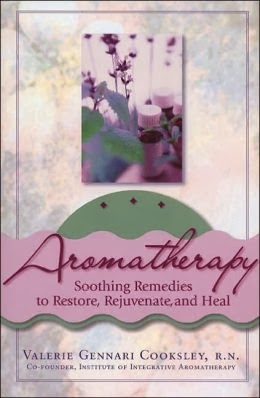
Another favorite book of mine is Aromatherapy - Soothing Remedies to Restore, Rejuvenate, and Heal by Valeri Gennari Cooksley, R.N. I really enjoy this book, Cooksley shares some great recipes and information in this book and I've used it so much so the book has fallen apart. You can purchase this book used for about 12 dollars on Amazon or for $ 49.95 from Barnes and Nobles. This is what it says about the book on Amazon:
"Science has now confirmed what has been known since the time of the Caesars: essential oils have healing properties for a wide variety of physical and emotional conditions. In fact, essential oils have been considered among the most therapeutic and rejuvenating of all botanical extracts.
This step-by-step guide demystifies the herbal healing art, and provides all the tools and techniques necessary to prepare and use the curative power of essential oils to relieve illness and restore youth and vitality -- without the use of drugs or other invasive health treatments. Chapters cover how to buy and make essential oils; how to use them to attain ultimate calm and relaxation; soothing, proven treatments for more than 100 health conditions; dozens of special blends and recipes developed by the author for a variety of ills; true case studies of healing success; plus a complete reference to the more than 100 aromatics and blends and their healing abilities."
---------------------------------------------------------------------------------------------------------------------------------

I always enjoy Valeri Ann Worwood's books and most of her books are available on kindle. The Complete Book of Essential Oils and Aromatherapy was the first book I purchased and it is a great book to look up quick information. This is what Amazon says about this book:

"A necessary resource for anyone interested in alternative approaches to healing, this book contains more than 600 easy-to-follow recipes for essential oil treatments and aromatherapy."
-----------------------------------------------------------------------------------------------------------

Aromatherapy for the Healthy Child is another book by Worwood and it is a must have book for parents. It is also available for kindle for only $ 9.99. This is what it says about this book on Amazon:
"This reference shows how essential oils can help parents raise healthier, happier children. Chapters cover every age from newborn to teen with aromatherapy remedies for typical problems--from diaper rash to bedwetting to asthma. The book features information for pregnant mothers and physically challenged children and appendices with reference charts, safety data, and supplier information. This is a valuable book for every concerned parent."
----------------------------------------------------------------------------------------------------------------------------------

The Fragrant Mind: Aromatherapy for the Personality, Mind, Mood and Emotion and Aromatherapy for the Soul: Healing the Spirit with Fragrance and Essential Oils  are two other books by Worwood that I own. 


This is what Amazon says about them:


"Written in an accessible style and aimed at aromatherapists, practitioners of alternative medicine, and anyone wishing to use aromatherapy to maintain a peaceful equilibrium or bring about positive change, this book concentrates on the mood-changing effects of natural oils. "A good addition to alternative medicine collections."--Library Journal.
----------------------------------------------------------------------------------------------------------------------------------


"Fragrances, with their intriguing ability to evoke emotions, memories, and visions, have played an important role in the world’s spiritual traditions since the dawn of time. Drawn from the essential oils of plants, they serve as an earthly connection with the Divine. In her fascinating book, renowned aromatherapist Valerie Ann Worwood breaks new ground with an in-depth study of the use of fragrance in spirituality. Drawing on the pioneering research of eminent scientists and the insights of leading spiritual teachers, she provides exhaustive guidelines detailing how fragrance can be used in many spiritual practices, from Shinto and Buddhism to Native American rites. Extensive charts, exercises, and formulas demonstrate the use of aroma in healing, prayer, and meditation and in conjunction with vibrational and energetic healing. Covering more than 70 essential oils, this extraordinary guide helps readers call upon the divine power of fragrance to enrich their own spiritual journeys."

I also like Kurt Schnaubelt's books but some of them may be little too intense for someone new at aromatherapy.


I also have many other books but the books mentioned above are the ones I like the most and are used very often. Do you have a favorite book that I didn't mention?

--------------------------------------------------------------------------------------------------------

Johanna is an aromatherapist and she is passionate about educating people about health, essential oils, real food, natural remedies, and nutrition so they make healthier choices in their lives. 
Follow Johanna on twitter and facebook for more health tips and information.


This post is linked to:
Wildcrafting Wednesday

Tuesday, 28 January 2014

Fragrance Energetics


'Fragrance energetics' was developed by Peter Holmes and it is a system where the aroma of essential oils is linked to their impact on their psyche. Jennifer Peace Rhind, in her book A Handbook for Aromatherapy Practice, writes that Peter Holmes "suggests that it is the energetic dimension of a fragrance that elicits responses within an individual, that manifest on cognitive, emotional and spiritual levels." Rhind also writes that Holmes "suggests that if the root of disease is in the psyche, the fragrance of the essential oils will work via the psychoneuroendocrine pathway, thus healing the physical dimension, and vice versa."

There are three fragrance parameters in fragrance energetics:
tone - The quality of the odor and the most significant
intensity and note -The evaporation rate

There are also six fragrance categories adapted to include the most common characteristics and odor types that can be found in essential oils. The different categories are rooty, lemony, spicy, green, sweet and woody. Specific therapeutic effects can be brought out by these six fragrance characteristics according to Holmes.

High/top tone oils such as citrus oils, niaouli, eucalyptus, ravintsara, mimosa absolute, ylang yland extra, and lavender will have an uplifting and stimulating effect. 

Low/base tone  oils such as sandalwood, vetivert, patchouli, most pine oils, woody oakmoss, and cinnamon will have a sedative and depressing effect.

According to Rhind, Holme suggested that:


"•Spicy oils are stimulating, invigorating, intensifying, awakening, opening and dispersing. 

•Sweet oils are relaxing, calming, harmonising, regulating, moistening, dissolving, nourishing and regenerating. 

•Lemony oils are clearing, clarifying, sensitising, focusing, energising and invigorating.


•Green oils are balancing and regulating, cooling, relaxing, clearing and clarifying.

 •Woody oils are centring, contracting, grounding and strengthening.

 •Rooty oils are stabilising, grounding, solidifying, tonifying, desensitising and calming."
Jennifer Peace Rhind. Essential Oils: A Handbook   for Aromatherapy Practice  Kindle Edition. 

The different odor effects can be chosen to counteract negative moods. When feeling insecurity and loss of boundaries the 'woody' sandalwood can be used to help since according to Rhind, it has contracting and centring properties.

Holmes also explored the application of essential oils using the Chinese medicine philosophy, where they correspond in terms of warm/cool qualities and their meridian tropisms. He also explored the essential oils' relationship with  Zang Fu, (Chinese organ) models,  and their relationship with the Chinese Five Elements.

He also explored acupoint applications, which means that essential oils are applied on the skin with a Q-tip before the acupuncture needle is inserted.

I found this very fascinating and I highly recommend Jennifer Peace Rhind's book, A Handbook for Aromatherapy Practice. Peter Holmes has also written books which I haven't read yet but they are on my wish list. A list of his books can be found here.


Source:
Jennifer Peace Rhind. Essential Oils: A Handbook for Aromatherapy Practice.  Kindle Edition. 


--------------------------------------------------------------------------------------------------------

Johanna is an aromatherapist and she is passionate about educating people about health, essential oils, real food, natural remedies, and nutrition so they make healthier choices in their lives. 
Follow Johanna on twitter and facebook for more health tips and information.


What's Your PMS Type?


I think most women have experienced PMS at some stage during their life. When I was younger I felt horrible days before my period. Fortunately, I haven't had any problems  since I started taking care of my body holistically.


PMS is mostly connected to toxicity, nutritional imbalances, and hormonal imbalance. A poor diet and nutritional deficiencies are the primarily causes of PMS. When your diet is high in sugar, white flour, corn syrup, and caffeine the chances are higher that you suffer from PMS. I noticed a significant difference when I removed all the refined white products and processed foods in favor of a diet high in vegetables, especially green leafy vegetables, and  good sources of protein. It is important to avoid synthetic estrogens in food and aim for organic dairy and meat. Good fats are important so experts suggest to increase your amount of omega oils, and especially Evening Primrose Oil which has proven helpful for many women.


According to Dr. Henry Bieler, in his book, Food Is Your Best Medicine, PMS means that the digestive tract and liver have become irritated from a poor diet, and as a result the toxins are entering the blood stream

PMS has been divided into different groups according to the symptoms and hormonal patterns. It is possible for a woman to suffer from all four types in one cycle, and only suffer from one in the next cycle. So, what type are you?


The different PMS types:

PMS-A (anxiety)
This group is associated with anxiety and symptoms include nervous tension, mood swings, anxiety, and irritability. This group biochemically shows a high estrogen to progesterone ratio. This could be related to congestion in the liver, and excess milk and animal fats. Steven Horne suggests that using liver cleansing herbs to clear congestion and progesterone cream may be helpful. Steven Horne also says magnesium, B6, and  GLA, (Gamma-linolenic acid) may be helpful as well. GLA can be found in plant based oils such as borage seed oil, evening primrose oil and black currant seed oil.

PMS-C (craving)
This group shows an increased appetite and food cravings, especially for sugar and chocolate. Some of the symptoms are dizziness, fainting, fatigue, and heart palpitations. This is linked with hypoglycemia and low prostaglandins. Remedies for hypoglycemia may be helpful, and Horne recommends Licorice root, and AlgaeCravings for chocolate may be caused by magnesium deficiency and essential fatty acid deficiencies. He also says zinc and B6 are other supplements that may help.

PMS-D (depression)
Depression, forgetfulness, crying, confusion, and insomnia are some of the characteristics of this group. According to Steven Horne, this is related to high progesterone and low estrogen, and magnesium  levels seem to be low in this group as well. Heavy metal toxicity from lead may be another factor. Steven Horne says natural phytoestrogens may be helpful.  He also says antistress vitamin supplement in herbal base can supply essential B-vitamins. Horne says St. John's Wort is an herb that historically has been used for the nervous system.

PMS-H (hyper hydration)
This group is associated with fluid retention. Weight gain, breast tenderness, swelling of extremities, and abdominal bloating are some of the characteristics of this group. According to Steven Horne this is caused by elevated levels of the hormone aldosterone. He also says diuretics may help. Horne also says Vitamin E, GLA, magnesium  and phytoestrogens may be helpful for this type of PMS as well.


Yeast infections may also contribute to PMS. Yeast infections are closely related to general toxicity. Progesterone affects yeast growth which means that women with yeast overgrowth often have more problems with yeast related symptoms during their later half of their cycle. You might want to consider Candida cleansing if you have problems with vaginal yeast infections, taken a lot of antibiotics or birth control pills. The endocrine glands work together, so thyroid problems may also contribute to PMS.


Aromatherapy
Essential oils and aromatherapy treatments may be beneficial in PMS. According to Battaglia, sweet fennel, geranium, and juniper berry used in a lymphatic drainage massage may reduce fluid retention.


Battaglia writes that clary sage, rose, geranium, sweet fennel influence the production of hormones and may be beneficial for  PMS. He says Roman chamomile, rose, and bergamot may be used to reduce irritability and depression. Battaglia also says in order for the essential oils to be beneficial for PMS, the above essential oils need to be used daily in a massage blend with evening primerose oil as the base oil.

Source: Salvatore Battaglia (1995). The Complete Guide to Aromatherapy. The Perfect Potion Pty Ltd


The best you can do is to avoid toxins and refined products. Eat a wholesome diet rich in vegetables, fruits and good proteins. Aim to buy as much organic food as possible, and don't forget to make sure you get sufficient amount of vitamins, minerals, and essential fatty acids. 


This post is linked up to:
 WFMW.Tuesday with a Twist, Wildcrafting Wednesday

Monday, 27 January 2014

Pizza Trick Play on Super Bowl Sunday

Source:  CDC
The question is not “are you eating pizza on Super Bowl Sunday” but rather, "are you ordering it online or with an app.” (News Flash:  Soon you will be able to order your pizza while driving to your friend’s house to watch any game on their big screen TV.   Recently, Dominos and Ford have joined forces and developed a synchronized app that allow drivers to easily order their Domino’s order for pickup or delivery using voice commands.)

The tricky thing about pizza (no matter how you order it) is how to enjoy it without putting on extra pounds by the end of the game.  A pizza pie with meaty and cheesy toppings can deliver over 3,000 calories to your half time celebration.  Altering the thickness of the crust and ordering your pizza top heavy with only veggies will help you score a satisfying pie for dramatically less calories.

Here are some comparisons from area pizzeria chains:


Tip:  Make a BIG tossed salad with light dressing and munch on it during the first half of the game.  By the time the pizza arrives at half-time, you will be so full that you will end up eating less no matter which type of pizza you order.

Be well, Joan

If you have topic you would like me to cover on my blog, please email me at: salge@bu.edu

                                              Follow Joan on Twitter at: joansalgeblake


Tuesday, 21 January 2014

Goodbye Kale. Hello Cauliflower.

Last year, we couldn’t talk enough about kale.  We made kale chips, kale smoothies, and even wore T-shirts telling us to eat more of it.  Well, that was last year and now is now.  Kale will be playing a second fiddle to cauliflower this year, according to food experts.

Cauliflower is part of the cruciferous family of vegetables that includes broccoli, Brussels sprouts, and bok choy.   Cruciferous vegetables contain glucosinolates, which give them that very pungent aroma when you cook them.   Aroma aside, when you cook, chew and digest cruciferous vegetables, the glucosinolates are broken down to form active compounds such as indoles, nitriles, thiocyanates, and isothiocyanates, which may have anticancer properties, according to the National Cancer Institute.  Research suggests that these compounds may help fight cancer by protecting your cells from DNA damage, inactivating cancer-promoting compounds, stopping tumors from forming in the blood vessels, and also by having anti-inflammatory effects in your body.

How can you enjoy cauliflower?   Chefs this year will be steaming, stir-frying, mashing, roasting and even thickening soups with cauliflower.  Here are five recipes that deliciously showcase cauliflower’s versatility:

Chinatown Vegetable Melody
Source:  Produce for Better Health


Stir fry cauliflower along with broccoli, snow peas, red peppers and carrots for a colorful side dish.  Add some steamed shrimp and brown rice and you’ll have the perfect cancer-fighting meal.

Cauliflower and Fennel with Dijon-Cider Vinaigrette
Combine cauliflower with fennel for a perfect dinner side or for leftovers the next day in your lunchtime salad.


Source:  Eating Well


Cauliflower Steaks with Chimichurri

When it comes to cauliflower, it’s all in the slicing.  By cutting the cauliflower into thick slabs, you can roast them so that the end product tastes “meaty.”   Add some fresh herbs and a little jalapeno pepper for a kick. 


Roasted Cauliflower Pasta 
Source: MyRecipes

Roast it and toss it with pasta for a quick, satisfying inexpensive meal.  Use whole wheat pasta to increase the whole grains and fiber in your dinner.


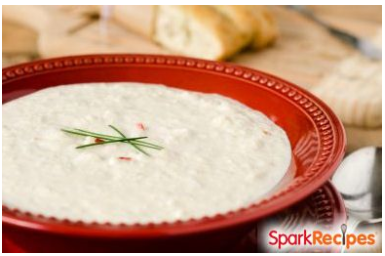
 It may look creamy and fattening, but this soup is far from it.   The beauty of cauliflower is that when it is pureed, it will thicken a soup and fool your taste buds into thinking that each spoonful is too rich to be true.  Add a salad for a light, but filling dinner. 


Be well, Joan


If you have topic you would like me to cover on my blog, please email me at: salge@bu.edu

                                        Follow Joan on Twitter at:  joansalgeblake


Thursday, 16 January 2014

The Game Day Snack Choice for the New England Patriots: Pistachios?

Bryan Snyder, Broncos (left), Ted Harper, Patriots (right)
Could pistachios be the secret weapon game plan for winning the AFC Championship game on Sunday?  Maybe. Ted Harper, Team Sports Dietitian for the New England Patriots and Bryan Snyder, Team Nutrition Manager for the Denver Broncos may be including them on the training table because of their health and longevity benefits. 

Both sports dietitians have recently signed on as ambassadors to the American Pistachio Growers’ nutrition education program to tout the heart-healthy benefits of pistachios.  A recent, large study published in the New England Journal of Medicine found that individuals who ate about a handful of nuts daily had a 20 percent lower death rate over the 3-year study period.

While they are rivals on the playing field, both Harper and Snyder agree that pistachios are an ideal snack, whether you are a professional athlete or an armchair spectator, according to a press release written by the American Pistachio Growers.  (Note to Coach Belichick: I hope you are also snacking on nuts at half-time.  We would like to keep you around for another decade…..at least.)  

Nuts, such as almonds, walnuts, pecans, and pistachios, are not only good sources of protein but also fiber, vitamin E, and potassium, which are three nutrients many Americans are falling short of in their diets.  Nuts also contain phytochemicals that have antioxidant and anti-inflammatory properties that may help your body fight against heart disease and certain cancers.   A handful of nuts can be a healthy daily snack to round off a well-balanced diet.
 
However, be careful that you don’t mindlessly chow down unlimited amounts of nuts, especially when watching Sunday’s AFC Championship game.  A cup of mixed nuts weighs in at about 900 calories.  That’s a hefty amount of calories to consume sitting sedentarily on the sidelines cheering the Patriots to another victory.   Keep to a healthy handful.

Be well, Joan


If you have topic you would like me to cover on my blog, please email me at: salge@bu.edu

                                        Follow Joan on Twitter at:  joansalgeblake

Monday, 13 January 2014

Eat Right to Look Younger

Maye Muske; Photo by Tom Contrino, with permission
According to Mintel’s consumer research, the anti-aging skincare market has grown to over $2 billion annually, and 76 percent of consumers concerned with aging are interested in products that use natural or organic ingredients.  What can be more natural and organic than the foods that you eat?  

Can your diet play a role in anti-aging?  Just ask Maye Musk, a 65-year old model and registered dietitian.  While Musk admits that genetics, getting adequate sleep, avoiding smoking, and limiting sun exposure, can all play a role in how your body ages, diet is key as “you have to eat well to look and feel young.”   She eats a healthy, high fiber diet to maintain her weight and youthful looks.  

According to the American Academy of Dermatology, a well-balanced diet rich in fresh vegetables, fruits, whole grains, and lean proteins can lead to healthier skin.   Elisa Zied, RD, author of the new book, Younger Next Week, agrees about the power of a healthy diet.  “For example, fruits and veggies not only keep us hydrated because of their high water content, but they can also help us look younger and better,” writes Zied.  Certain phytochemicals and nutrients in foods may also play a specific anti-aging role in helping your skin look more youthful.  “Research suggests that eating more carotenoid-rich produce is associated with improved skin color and a more healthy and attractive appearance,” according to Zied. 

As we age our skin becomes thinner and drier, losing some of the elasticity that we had in our youth, which paves the way to wrinkles, according to researcher, Richard L. Roberts, Ph.D.  These changes are accelerated by exposure to ultraviolet (UV) rays from the sun as well as tanning beds.  While the skin has a natural antioxidant capacity to protect against damage caused by those UV rays, too much exposure can overwhelm its capabilities leaving the skin vulnerable to damage.  According to an article authored by Roberts and published in the American Journal of Lifestyle Medicine, lutein and zeaxanthin are two carotenoids that may help boost the antioxidant capacity of your skin as well as the health of your eyes.   Look to egg yolks, corn, orange peppers, orange juice, and red grapes for excellent sources of both of these antioxidants.

“Drinking tea also has its perks when it comes to looking and feeling younger,” according to Zied.  “Many of the benefits of tea are linked with its high content of polyphenols (specifically flavonoids), powerful plant chemicals that act as antioxidants that also can protect against UV skin damage.”

Vitamin E is another important antioxidant in the skin that helps avoid accelerated aging.  According to an article published in Clinics in Dermatology, adequate stores need to be maintained in the body daily.  Unfortunately, many Americans fall short of their daily needs of this vitamin so adding vitamin E-rich foods sources, such as wheat germ, sunflower seeds, almonds, and corn and olive oil, can help boost your intake.  Since this antioxidant works synergistically with vitamin C in the body, your diet should also have a wide variety of vitamin C-rich foods, such as citrus fruits, kiwi, strawberries, peppers and broccoli.    Research also suggests that vitamin C, in and of itself, may also help reduce the prevalence of wrinkles and dry skin due to aging.  Lastly, vitamin A, which is found in carotenoid-rich dark green veggies, such as spinach and kale, and orange vegetables, such as carrots, sweet potatoes and pumpkin, is also needed for healthy skin.

“Sometimes life will get in the way of making the best food choices, but if we prioritize nurturing ourselves and make time to care for ourselves, we can reclaim the vitality we so deserve,” states Zied.

Be well, Joan


If you have topic you would like me to cover on my blog, please email me at: salge@bu.edu

                                        Follow Joan on Twitter at:  joansalgeblake