Wednesday, 19 November 2014

About Evoke Aromatherapy


Evoke Aromatherapy is a holistic aromatherapy company that provides products which are specifically formulated to address common wellness concerns in adults, children and babies.

Each Evoke product is formulated and hand crafted by a certified aromatherapist using accurate dilutions according to their intended uses. Adults, children and babies have different requirements for quantities and types of oils they can use. Evoke Aromatherapy is conscious of this and blends accordingly. Our products are supportive to the whole body and by the very nature of essential oils and their properties, encourage wellness of the whole body on both a specific and overall spectrum.

Our products for adults, children and babies are created using the highest quality independently sourced pure essential and vegetable oils available. Our products are vegan, not tested on animals, use glass recyclable bottles, are hypoallergenic, and are created with natural and organic ingredients. They are also free from synthetic fragrances, chemicals and petroleum by-products. Evoke is not affiliated with multi-level marketed companies nor do we use their oils or products.


Evoke Aromatherapy was born on Kauai, Hawaii in 2012. Evoke’s conception however happened many years before having started under the name Healing Thyme Aromatherapy. Having been born on Kauai, Hawaii, Evoke was saturated in the healing energy of the Hawaiian Islands and given the time needed to absorb this energy and beauty into its very essence. Evoke Aromatherapy is now ready to spread this Aloha experienced on Kauai.

The Evoke logo image is an albatross, which flew over the waters from where Evoke’s founder worked, symbolizing the freedom and expansiveness that is in Evoke’s essence. The crystal clear waters ebbed and flowed below her feet creating the harmony and color of the image. The trade winds blew, the ocean moved and the sounds, smells and harmony became entwined with Evoke as organically as the healing powers of essential oils are entwined with the plant. With loving-kindness these properties are extracted to serve their purpose of helping to bring wellness to adults, children and babies in a gentle, loving and nurturing way.

We love what we do and hope you feel this love with our products. You deserve the best and to live your best life.

Evoke by definition is the calling forth of what lies in the unconscious into the conscious. Together with Evoke Aromatherapy you can call forth the joy and wellness you have been creating for your life.

Evoke encourages us to “live with love in our heart and actions” ♥

Wednesday, 12 November 2014

Can We Really Eat Like Our Paleo Ancestors?

Source: USDA
While there are over 10,000 Paleo cookbooks, diet books, and food products such as paleo pizza crust, paleo apple crisp granola, and paleo wraps available on Amazon.com, can we really follow the Paleo diet that our Stone Age cousins were consuming? 

“Probably not,” according to Dr. David Katz, the founding director of Yale University’s Prevention Research Center, “because the plants and animals that our ancestors were consuming are now extinct.  More importantly, they definitely were not processed.” There goes the Paleo pizza crust.   The Paleo diet is based on eating only the foods presumably eaten by our hunting and gathering ancestors.

Katz spoke this week at the Whole Grains Breaking Barriers Conference sponsored by Oldways.   “The meat that our ancestors hunted for was much leaner, lower in heart unhealthy saturated, and higher in healthy omega-3 fatty acids than what is available today in our supermarkets.  They were not hunting for pastrami and salami,” noted Katz.

In reality, our Stone Age ancestors gathered whole plant foods and ate them without added sugar or salt. In other words, the apples were plucked and consumed right off the tree, not sliced, tossed with sugar, and baked smothered with a buttery crisp topping.  Forget adding the à la mode part for obvious reasons.

According to Katz, our Paleolithic ancestor consumed about 100 grams of fiber daily.  Since carbohydrate-rich fruits, vegetables, nuts, and seeds can only provide about 2 to 6 grams of fiber per serving, this meant that they had to have consumed a lot of plant foods to rack up that much fiber every day.  A study in Spain looking at Neanderthals’ remains and soil samples of their bodily waste products has dug up evidence that their diet contained a routine amount of plants, such as berries and nuts.  In essence, the vintage Paleo diet appears to be plant-based, a tenet of what we know to be a healthy diet today.

In addition to the roughage, these plant foods also added a bushel of health-promoting antioxidants, phytochemicals, vitamins, and minerals to this Paleolithic diet.  “While agriculture wasn’t available in the Stone Age, adding whole grains to the diet of Americans can inexpensively add fiber, healthy nutrients, compounds,” states Katz.  Currently Americans are consuming only 16 grams of dietary fiber daily, on average.  The recommendation is to consume 20 to 35 grams daily. 

The vintage Paleo diet, with tons of plant foods and the consumption of only lean meats, does contain many healthy attributes. “The problem is that most Americans don’t have time to hunt and gather their foods in the wild and are eating Paleo-like processed foods instead.  These foods were not part of history,” notes Katz.  

Be well,

Joan

Twitter:  @JoanSalgeBlake

Tuesday, 4 November 2014

The Dangers of Mixing Medications and Dietary Supplements

Source:  FDA
If you are one of 72 million Americans who take both dietary supplements and medications (prescribed and over-the-counter), you could be swallowing a dangerous, even-life threatening mix, according to the Food and Drug Administration (FDA).  Some dietary supplements, even if they sound “natural” can increase or decrease the effectiveness of the medications.

For example, if you are taking the blood thinner, warfarin (Coumadin), you do not want to also be consuming ginkgo biloba, aspirin, or vitamin E as each of these also can thin the blood.  Taking any of these supplements with the blood thinner could increase the potential for internal bleeding or stroke, according to the FDA.  If you are taking a birth control pill, you definitely do not want to be simultaneously consuming the herbal supplement, St. John’s Wort.  This supplement can make the pill less effective.  Not exactly a good combo.  Keep in mind that the FDA does not review dietary supplements based on their effectiveness as it does for medications.

Here is a partial list of other potential interactions between dietary supplement and medications:


Click here for a more extensive list of supplements and their potential interactions with medications.

You should always check with your health care provider before consuming any dietary supplement.  Based on your medical history, supplements may not be healthful, and taken with certain medications, they can be downright harmful.

Be well, Joan

Twitter:  @JoanSalgeBlake

Thursday, 30 October 2014

The Scariest Halloween Candy You Can Eat


Thomas is the youngest of four children in a hectic household filled with school, homework, and soccer practices.   Starting when Thomas was 4-years old, his older sister offered to help out the family and read to him every night before he fell off to sleep.   For years, this routine went surprisingly without a hitch; however, Thomas’ dental visits became a family anomaly.  While his siblings never developed any cavities, Thomas had developed 14 cavities by the age of 9. 

With a little investigation, it was uncovered that Thomas’ sister would dole out hard candy to him each night during his bedtime reading to keep him quiet.   In essence, Thomas sweetly dozed off with a mouthful of sugar stuck to his teeth.  Since there are four ingredients necessary to make a cavity:  1) bacteria, 2) a tooth, 3) carbohydrates (sugars), and 4) time, Thomas’ situation was a “perfect storm” for creating cavities.  The teeth in his bacteria-filled mouth were covered with globs of sugar all night long.

This trick-or-treat season, the American Academy of Pediatric Dentistry (AAPD) is reminding us that kids should not only curtail the amount of candy they consume but should also avoid the more sticky and gooey sweets, such as gummies, caramels, and sour candies.  These types of sweets can get stuck in the grooves and crevices of the teeth making it more difficult for the saliva in the mouth to wash them away.  Sour candies add an additional harm as their high acid content also erodes the tooth enamel, making it easier for a cavity to form.

According to the AAPD, the more tooth- friendly Halloween treat is milk chocolate, which isn’t sticky or acidic.   Dark chocolate is even a better bet as it contains antioxidants such as polyphenols and flavonoids, which can actually stop the unhealthy bacteria from sticking to the teeth, prevent gum infections, and fight tooth decay.   Also, according to research, sugarless gum that contains xylitol can actually promote the presence of healthy bacteria that protect the teeth and fight the buildup of plaque. 

To reduce the amount of candy that is consumed, consider participating in the Halloween Candy BuyBack program.   As part of the program, many dentists are offering to buy back the kiddies’ excess candy stash.  To find a participating dentist in your area, just enter your zip code here

What are these dentists doing with the candy surplus?  They are mailing it to Operation Gratitude, which ships the candy, along with toothbrushes, toothpaste, dental floss as well as entertainment and homemade items to our troops overseas.  You can also bypass your dentist altogether and send your candy with other helpful items directly to the troops.

This year, my neighborhood ghosts and goblins are getting chocolate and sugarless gum, and the leftovers are going to the troops.


Be well,

Joan

Twitter: @JoanSalgeBlake

Thursday, 23 October 2014

Why Your Muscles Need Cottage Cheese

I grew up eating cottage cheese on a regular basis, but for some reason, I have forgotten to put it on my grocery shopping list.   But based on the scientific evidence presented this week at the Academy of Nutrition and Dietetics Food & Nutrition Conference & Expo in Atlanta, Georgia, cottage cheese is another one of my retro foods that will be making a comeback in my diet on a regular basis.

Cottage cheese is a good source of leucine, one of the several important amino acids that comprise  high quality proteins found in lean meats, fish, poultry, and dairy.   Previously, I have blogged about the importance of spreading out your protein intake during your day to maximize your body’s ability to synthesize lean muscle mass during your entire day.

In essence, you need to be consuming adequate amounts of high quality protein at each meal to optimize and maintain lean muscle mass.  This is especially important as you get older as your muscle mass tends to decline as you age.   According Christopher Mohr, PhD, RD, a presenter at the conference, muscle mass declines by 0.5 to 1 percent each year beginning at about 40 years of age.

This latest research suggests that the amino acid, leucine, which is found abundantly in cottage cheese as well as other dairy foods, meat, and eggs, enhances the process of making lean muscle mass.   According to Mohr, leucine is the igniter that sparks the synthesis of muscle mass in the body.   Hence, my beloved cottage cheese is very good for my muscles.

If you haven’t consumed it recently, cottage cheese has taken on a new look in the culinary world.  The picture chart and recipes below are a delicious illustration of how cottage cheese can be paired with variety of flavors at any meal or snack:

                                                                                        Berry Breakfast Parfait


                                                                                        Italian Tomatoes with Herbs


                                                                                       Cinnamon Peach Swirl


                                          Strawberry and Spinach Salad

If you want someone else to do the culinary pairing for you, there are a variety of pre-paired combinations such as cucumber and dill and garden vegetables cottage cheeses already blended for you at the supermarket.

Cottage cheese is back in my diet, and my muscles are thanking me for it.

Be well,

Joan

Twitter:  @JoanSalgeBlake

Thursday, 16 October 2014

You Are Nuts If You Are Not Eating Nuts


What’s not to love about them?  They are a health darling as they are high in protein, fiber, vitamin E, potassium, and healthy fats and low in unhealthy saturated fat.   Recent research showing that that a 1 ounce serving daily may help reduce your risk of getting heart disease by 19 percent has only added to other studies touting the heart health benefits of nuts.   The Food and Drug Administration (FDA) allows nuts to boast a health claim on their labels specifying that "scientific evidence suggests, but does not prove, that eating 1.5 ounces per day of most nuts as part of a diet low in saturated fat and cholesterol may reduce the risk of heart disease."

Nuts can also be a perfect snack when hunger hits between meals.   In a study in the European Journal of Clinical Nutrition, 1½ ounces of almonds consumed as a snack daily for four weeks helped to suppress hunger between meals.  Because the participants were less hungry after munching on the almonds, they reduced their calorie intake by eating less at the next meal, so weight gain wasn’t an issue.  The fiber, protein, and healthy unsaturated fats in nuts all contribute to satiety, or that feeling of fullness, between meals.

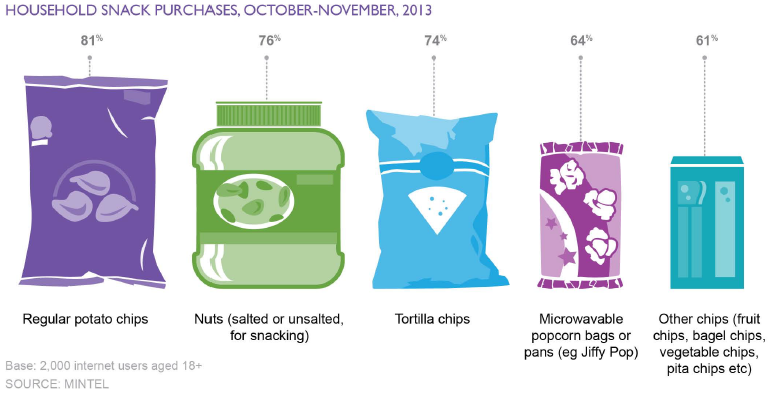
According to Mintel research, the consumption of nuts is the No. 2 snack choice among consumers and is projected to grow by leaps and bounds in the coming years among Americans:


The only downside to nuts is the potential for mindlessly over-consuming them right out of the jar and not realizing that you are adding 180 to 190 calories per ounce serving of extra calories to your daily diet.   Here is what an ounce of nuts looks like:


Keep to a serving and make sure your nut snack replaces the another snack in your diet, not in addition to it.

Be well, Joan

Twitter: @JoanSalgeBlake


Thursday, 2 October 2014

Delayed- Onset Muscle Soreness (DOMS) and Essential Oils


It was thought among experts that DOMS was caused by the lactic acid, the by-product of anaerobic metabolism (glycosis). However, it is now believed that the free radicals hydroperoxides, ammonia, and hydroxyl radicals cause hydroxyproline damage. Hydroxyproline can be found in the connective tissue.  It is a constituent of the collagen.

Any movement that is new can cause tearing and swelling that leads to soreness  However, it is mostly the eccentric muscle contractions that lead to DOMS. Eccentric muscle contractions are movements that cause the muscles to forcefully contract while it lengthens. Going down the stairs, lowering weights, running downhill, and the downward movements of squats and push ups.

Stretching, hydration, pre-workout warm up, and massage are some things that may reduce DOMS. It is wise to add antioxidants before and after training to minimize or reduce occurrence of DOMS. Remember, higher intensity training increases the risk of DOMS. Some antioxidants to consider are Pantothenic Acid, niacin, vitamin C & E, beta-carotene, COQ10, n-acetyl cysteine, zinc, selenium, grape seed extract and L-Glutathione. Rehydration drinks with electrolytes, carbohydrates and ascorbates should also be consumed. 

 Essential oils have a high antioxidant value in addition to the other healing properties.

Here are some blends to try for over exercised muscles.
Hot Bath
Marjoram 3 drops
Lemon 2 drops
Follow with the massage oil below


Massage Oil for Over-Exercised Muscles
Eucalyptus 5 drops
Peppermint 5 drops
Ginger 5 drops
Dilute in 1 tablespoon vegetable oil.

More Blends:
Sore Muscle Blend
Juniper 8 drops
Wintergreen or Birch 10 drops
Lemon 8 drops
Rosemary cineol 4 drops
Lavender 8 drops

Sore Muscle Blend No.2
Cypress 9 drops
Rosemary cineol 4 drops
Lavender 8 drops
Elemi 2 drops
Valerian 2 drops

Other essential oils that may be useful are nutmeg, black pepper, basil, spruce, Roman Chamomile, peppermint. 

Important
This information is for educational purposes only, and is not meant to diagnose or prescribe.  If you are pregnant, breastfeeding, or suffer from a medical condition, consult with your health care practitioner prior to using essential oils. Be careful when using essential oils with hormonal activity and don’t hesitate to contact a professional. Make sure that you look over the safefy information before you start using essential oils.


Before you leave:


I recommend that you always perform a skin patch test when you try a new oil.

Check out my safety page to make sure you are aware of any contrindications before you use essential oils. Some oils are not suitable when suffering from certain conditions. Also, Read this Before You Start Using Essential oils. Some oils should not be applied prior to sun exposure so make sure you check this list before spending time in the sun.

Not sure how to apply the oils? Visit these pages to learn how to apply the oils:
If you're new to essential oils you might want to check out my Getting Started Guide. 
------------------------------------------------------------------------------------------------------

Johanna is an aromatherapist and she is passionate about educating people about health, essential oils, real food, natural remedies, and nutrition so they make healthier choices in their lives. 

Follow Johanna on twitter and facebook for more health tips and information.