If you haven’t added whole grains to your diet yet, it may be easier this week to make the change. Organized by our own Boston-based, non-profit Oldways and its Whole Grains Council, Wednesday April 2 is the third annual, nationwide Whole Grain Sampling Day. Their goal is to nudge you along to make at least half of your daily grains servings be whole grain choices such as whole wheat bread and pasta, oats, barley, and popcorn.
According to the Journal of Nutrition, whole grains may help you lower your risk of heart disease, diabetes, cancer, and even better manage your weight. The most compelling finding among researchers is they don’t exactly know what it is in the whole grains that give them this star quality. Most likely, it’s a combination of its healthy components, such vitamins, minerals, fiber, and phytochemicals working, synergistically to provide the health benefits.
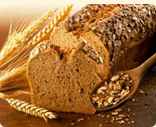
To help in this whole grain crusade, there are numerous area eateries that are showcasing whole grains on their menu:
Dunkin' Donuts is celebrating Whole Grain Sampling Day – all week long. Visit a store between March 31 and April 6 for a Buy-One-Get-One-Free offer on Whole Wheat and Multigrain bagels. Use the Dunkin' Donuts mobile app to get this tasty offer.
California Pizza Kitchen will be using social media to talk up their whole grain choices, including whole wheat pizza crust, whole wheat pita, and quinoa-arugula salad.
Bon Me Food Trucks will be promoting their whole grain Vietnamese cuisine featuring rice bowls made with brown rice and soba noodle salads.
Clover Restaurants and Food Trucks will be promoting their fresh and delicious whole grain soups, salads, and pita bread. Visit them on Facebook and Twitter to see what's cooking on April 2nd.
Happy Whole Grain Sampling Day (Week)!
Be well, Joan
Follow Joan on Twitter at: joansalgeblake
Monday, 31 March 2014
Friday, 14 March 2014
Dole Recalls Bagged Salads Due to Potential Listeria Contamination
Dole Fresh Vegetables is voluntarily recalling a limited number of cases of bagged salad. The products being recalled are Dole Italian Blend (UPC 7143000819), Fresh Selections Italian Style Blend (UPC 1111091045), Little Salad Bar Italian Salad (UPC 4149811014) and Marketside Italian Style Salad (UPC 8113102780) coded A058201A or B, with Use-by date of March 12, 2014 due to a possible health risk from Listeria monocytogenes. Dole Fresh Vegetables is coordinating closely with regulatory officials. No illnesses have been reported in association with the recall.
The product code and Use-by date are in the upper right-hand corner of the package; the UPC code is on the back of the package, below the barcode. The salads were distributed in 15 U.S. states (Connecticut, Florida, Illinois, Indiana, Kentucky, Maryland, Massachusetts, Michigan, New Jersey, New York, North Carolina, Ohio, Pennsylvania, South Carolina, Virginia) and 3 Canadian provinces (New Brunswick, Ontario & Quebec).
No illnesses have been reported in association with the recall. This precautionary recall notification is being issued due to one sample of Dole Italian salad which yielded a positive result for Listeria monocytogenes in a random sample test conducted by the Canadian Food Inspection Agency.
Although product is one day past its Use-By date and it is highly unlikely that any product is still available at retail, retailers should check their inventories and store shelves to confirm that none of the product is mistakenly present or available for purchase by consumers or in warehouse inventories. Dole Fresh Vegetables customer service representatives are already contacting retailers and are in the process of confirming that the recalled product is being removed from the stream of commerce.
Listeria monocytogenes is an organism that can cause foodborne illness in a person who eats a food item contaminated with it. Symptoms of infection may include fever, muscle aches, gastrointestinal symptoms such as nausea or diarrhea. The illness primarily impacts pregnant women and adults with weakened immune systems. Most healthy adults and children rarely become seriously ill.
No other salads are included in the recall. Only the specific Product Codes, UPC codes and March 12, 2014 Use-by date identified above are included in the recall. Consumers who have any remaining product with these Product Codes should not consume it, but rather discard it. Retailers and consumers with questions may call the Dole Food Company Consumer Response Center at (800) 356-3111, which is open 8:00 am to 3:00 pm (PT) Monday - Friday.
Be well, Joan
The product code and Use-by date are in the upper right-hand corner of the package; the UPC code is on the back of the package, below the barcode. The salads were distributed in 15 U.S. states (Connecticut, Florida, Illinois, Indiana, Kentucky, Maryland, Massachusetts, Michigan, New Jersey, New York, North Carolina, Ohio, Pennsylvania, South Carolina, Virginia) and 3 Canadian provinces (New Brunswick, Ontario & Quebec).
No illnesses have been reported in association with the recall. This precautionary recall notification is being issued due to one sample of Dole Italian salad which yielded a positive result for Listeria monocytogenes in a random sample test conducted by the Canadian Food Inspection Agency.
Although product is one day past its Use-By date and it is highly unlikely that any product is still available at retail, retailers should check their inventories and store shelves to confirm that none of the product is mistakenly present or available for purchase by consumers or in warehouse inventories. Dole Fresh Vegetables customer service representatives are already contacting retailers and are in the process of confirming that the recalled product is being removed from the stream of commerce.
Listeria monocytogenes is an organism that can cause foodborne illness in a person who eats a food item contaminated with it. Symptoms of infection may include fever, muscle aches, gastrointestinal symptoms such as nausea or diarrhea. The illness primarily impacts pregnant women and adults with weakened immune systems. Most healthy adults and children rarely become seriously ill.
No other salads are included in the recall. Only the specific Product Codes, UPC codes and March 12, 2014 Use-by date identified above are included in the recall. Consumers who have any remaining product with these Product Codes should not consume it, but rather discard it. Retailers and consumers with questions may call the Dole Food Company Consumer Response Center at (800) 356-3111, which is open 8:00 am to 3:00 pm (PT) Monday - Friday.
Be well, Joan
Follow Joan on Twitter at: joansalgeblake
Thursday, 13 March 2014
How Much Sugar Should You Be Consuming Daily?
If the World Health Organization (WHO) has its way, the recommended amount of sugars that you should be consuming daily is about to drop dramatically. The organization has proposed that sugars should provide less than five percent of your total daily calories, about half the amount of their previous recommendation. Their proposed advice is based on research that suggests that sugars are related to both excess weight gain and tooth decay.
So what would this small amount of sugars look like daily? If you need to consume 2,000 calories daily to maintain your weight, this will translate to no more than 100 calories from sugar or the equivalent of about six teaspoons of sugar per day. For many of us, this measly amount would be exceeded by eating a carton of fruit yogurt:
Currently, Americans are consuming over 20 teaspoons of added sugars a day with the majority of it coming from sweetened beverages.
In fact, if you consume a can or a 20-ounce bottle of a sweetened beverage daily, you will likely be gulping over three times the amount the WHO is proposing daily:
If you consume more added sugars in you diet than you would prefer, here are some tips to help you reduce the amount of added sugars daily:
Be well, Joan
Follow Joan on Twitter at: joansalgeblake
So what would this small amount of sugars look like daily? If you need to consume 2,000 calories daily to maintain your weight, this will translate to no more than 100 calories from sugar or the equivalent of about six teaspoons of sugar per day. For many of us, this measly amount would be exceeded by eating a carton of fruit yogurt:
| Source: Nutrition & You |
| Source: Nutrition and You |
If you consume more added sugars in you diet than you would prefer, here are some tips to help you reduce the amount of added sugars daily:
- Drink water rather than soda or sweetened beverages throughout the day. You will also save a ton of money annually if you switch to tap water, which is free, rather than buying a sweetened beverage.
- Mix equal amounts of sweetened cereal with an unsweetened variety for a breakfast cereal with half the added sugars.
- Buy sweets such as candy and cookies in individual serving sizes rather than large packages. The less you buy, the less you will eat.
- Sweeten nonfat plain yogurt with naturally sweet berries, pineapples, or mangoes rather than adding sugar.
Be well, Joan
Follow Joan on Twitter at: joansalgeblake
Monday, 10 March 2014
The Latest on Beer
Move over red wine. The buzz on beer is that it can provide some nutrition as well as health benefits. “While red wine enjoys a reputation for sophistication and health benefits, emerging research reveals that beer has unique nutritional and health benefits,” claims registered dietitian and an Academy of Nutrition and Dietetics (AND) media spokesperson, Andrea Giancoli.
According to AND and the latest research, drinking beer in moderation, can possibly help:
Lower the risk of heart disease. Beer, especially dark beer, pours up about a gram of soluble fiber in each 12-ounce bottle compared to none in wine. Research suggests that consuming adequate amounts of soluble fiber-rich foods such as oats, barley, pears, and dried beans, as part of a healthy diet, can help lower the LDL “bad” blood cholesterol levels in the body. Also, the hops and malt in beer provide polyphenols, specifically, flavonoids, which can act as heart-healthy antioxidants, among other things, in your body. Lastly, any source of alcohol, whether it comes from wine, liquor, or beer increases the level of the HDL “good” cholesterol in your blood.
Lower the risk of kidney stones in men. It appears that compounds in hops, by slowing the release of calcium from the bone, help limit kidney stone formation.
Build strong bones. Beer is rich in silicon, an element which is linked to stronger bones. Keep in mind that excessive alcohol consumption, no matter the source, can weaken your bones.
What’s moderation? For men who choose to drink, moderation is considered up to 2 drinks daily, and for women, it’s up to one drink a day. A drink is considered 5 ounces of wine, 1.5 ounces of liquor, or 12 ounces of beer.
Cheers!
Joan
Follow Joan on Twitter at: joansalgeblake
According to AND and the latest research, drinking beer in moderation, can possibly help:
Lower the risk of heart disease. Beer, especially dark beer, pours up about a gram of soluble fiber in each 12-ounce bottle compared to none in wine. Research suggests that consuming adequate amounts of soluble fiber-rich foods such as oats, barley, pears, and dried beans, as part of a healthy diet, can help lower the LDL “bad” blood cholesterol levels in the body. Also, the hops and malt in beer provide polyphenols, specifically, flavonoids, which can act as heart-healthy antioxidants, among other things, in your body. Lastly, any source of alcohol, whether it comes from wine, liquor, or beer increases the level of the HDL “good” cholesterol in your blood.
Lower the risk of kidney stones in men. It appears that compounds in hops, by slowing the release of calcium from the bone, help limit kidney stone formation.
Build strong bones. Beer is rich in silicon, an element which is linked to stronger bones. Keep in mind that excessive alcohol consumption, no matter the source, can weaken your bones.
What’s moderation? For men who choose to drink, moderation is considered up to 2 drinks daily, and for women, it’s up to one drink a day. A drink is considered 5 ounces of wine, 1.5 ounces of liquor, or 12 ounces of beer.
Cheers!
Joan
Follow Joan on Twitter at: joansalgeblake
Wednesday, 5 March 2014
The World's Most Popular Food: Pizza
| Source: USDA |
Pizza is so wildly popular around the globe that the United States Department of Agriculture (USDA) just released a dietary report on its consumption among Americans.
Take this brief quiz to see how pizza savvy you are:
Click on the video to find out the quiz answers.
Since Americans eat so much pizza on a regular basis, it probably isn't too surprising that it is the
No. 2 source of saturated fat in Americans' diets:
| Source: USDA The easiest way to tone down the calories and saturated fat in your beloved pie is by ratcheting down the amount of meat toppings and loading up the pie with plenty of veggies. Using my Virtual Pizza Parlor program, you can build your own personalized pizza, starting with the thickness of the crust and adjusting the sauce and toppings, to see how the calories and nutrients slice up per serving. The results are dramatic! Have fun, Joan Follow Joan on Twitter at: joansalgeblake |
Thursday, 27 February 2014
How Will the New Nutrition Fact Panel on the Label Differ From the Old One?
Well, it has been more than 20 years since the Nutrition Fact Panel first appeared on the food label so the time has come to update it based on the latest nutrition science. Since poor nutrition is associated with obesity, heart disease, certain cancers, stroke, and diabetes, the FDA has proposed a new nutrition panel that will make it easier for consumers to make healthier food choices at the supermarket.
The proposed new panel will replace out-of-date serving sizes to better align with how much people really eat. For example, a serving of ice cream (and the corresponding calories) is currently listed on the panel as a ½ cup. This means that a pint of Ben and Jerry’s Chunky Monkey is supposed to serve four people. Since you likely scooped out a full cup when you served ice cream, the new proposed Nutrition Fact Panel will now reflect this more realistic amount in your bowl.
“The new changes are based on science, and they take people’s actual eating behavior into account. Serving sizes for many products have been updated to realistically reflect the amounts people actually eat at one sitting and nutrient [calorie] comparisons between ‘per serving’ and ‘per container’ are available,” said registered dietitian nutritionist and Academy of Nutrition and Dietetics President Dr. Glenna McCollum.
In other words, when you guzzle a 20-ounce bottle of soda, the calories will reflect your entire consumption.
In addition to the above changes, both potassium and vitamin D, two important nutrients that many folks are falling short of in their diets will also be added along with calcium and iron. The amount of vitamin A and C per serving will no longer be required to be listed, but the amount of 'added sugars' will be listed.
Here is a side-by-side comparison of the old and new Nutrition Fact Panels:
Old: New:
Once these proposed label changes are solidified, manufacturers will have just over two years to comply with these new requirements.
Be well, Joan
Follow Joan on Twitter at: joansalgeblake
The proposed new panel will replace out-of-date serving sizes to better align with how much people really eat. For example, a serving of ice cream (and the corresponding calories) is currently listed on the panel as a ½ cup. This means that a pint of Ben and Jerry’s Chunky Monkey is supposed to serve four people. Since you likely scooped out a full cup when you served ice cream, the new proposed Nutrition Fact Panel will now reflect this more realistic amount in your bowl.
| Source: FDA |
In other words, when you guzzle a 20-ounce bottle of soda, the calories will reflect your entire consumption.
| Source: FDA |
Here is a side-by-side comparison of the old and new Nutrition Fact Panels:
Old: New:
Once these proposed label changes are solidified, manufacturers will have just over two years to comply with these new requirements.
Be well, Joan
Follow Joan on Twitter at: joansalgeblake
Wednesday, 26 February 2014
Study: Where Are All The Coupons for Healthy Foods?
| Source: Amazon |
Over the past year, I have noticed that I am clipping less, and consequently, saving less at the supermarket. Apparently, I am not the only one noticing this coupon desert.
Researchers at the University of California San Francisco (UCSF) scoured over 1,000 online store coupons from six national grocery chains and uncovered that deals for healthy foods were practically nonexistent:
I did my own web crawling and found a few supermarket and major food company websites that provided coupons for healthier foods, such as juiced-packed canned fruit, lean ground turkey, and frozen veggies as well as low fat yogurts and whole grain cereals. I also uncovered that March is National Frozen Food Month, which is good news for healthy bargain hunters as frozen veggies and fruits are as nutritious as fresh. Also, frozen produce is cleaned, prepped, and ready-to-cook. It's like have Rachel Ray tucked away in your freezer.
According to Julie Henderson at the National Frozen and Refrigerated Foods Association (NFFA), the consumer can expect to see more newspaper coupons for frozen foods starting this Sunday and during the month of March. Many food manufacturers may also be putting their frozen food products on sale as well as offering additional coupons online.
Here are some coupon links that I uncovered to help you eat healthier and save money while doing it:
Passion for Savings
Whole Foods
Live Better America
Birds Eye
Be well, Joan
If you have topic you would like me to cover on my blog, please email me at: salge@bu.edu
Follow Joan on Twitter at: joansalgeblake
Subscribe to:
Posts (Atom)

